
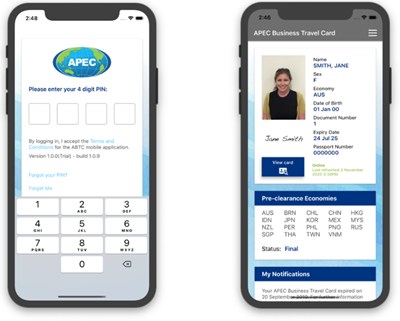
The APEC Business Travel Card (ABTC) is a facilitation initiative under the Asia-Pacific Economic Cooperation (APEC) framework that allows eligible business people to travel more easily within participating APEC economies. For Malaysian entrepreneurs, executives, and investors who travel frequently across the Asia-Pacific region, the ABTC offers substantial time, cost, and administrative savings.
This article explains what the APEC Business Travel Card is, how it works in Malaysia, who is eligible, and why it remains a valuable tool for cross-border business activities.
What Is the APEC Business Travel Card?
The APEC Business Travel Card is a multiple-entry travel card issued by a participating APEC economy that grants its holder:
- Visa-free or visa-on-arrival access to other participating APEC economies
- Fast-track immigration clearance through designated APEC lanes
- Pre-cleared entry approval from multiple economies under one application
The card is designed to facilitate legitimate business travel and strengthen economic integration across the Asia-Pacific region.
APEC Economies Participating in the ABTC Scheme
As of now, the ABTC is recognised by most APEC economies, including:
Australia, Brunei, Chile, China, Hong Kong, Indonesia, Japan, South Korea, Mexico, New Zealand, Papua New Guinea, Peru, the Philippines, Singapore, Taiwan, Thailand, Vietnam, and Malaysia.
Each economy determines its own immigration rules, length of stay, and entry conditions for ABTC holders.
APEC Business Travel Card Malaysia: Key Benefits
For Malaysian cardholders, the ABTC provides several practical advantages:
1. Visa-Free Business Travel
Holders can enter participating APEC economies for short-term business visits without applying for individual visas, subject to each economy’s stay limits.
2. Faster Immigration Clearance
Dedicated APEC lanes at major international airports significantly reduce waiting times, particularly valuable for frequent travellers.
3. Multiple Economies, One Application
Instead of applying for multiple business visas, applicants submit one ABTC application, which is circulated for pre-clearance among participating economies.
4. Long Validity Period
The Malaysian ABTC is typically valid for five years, making it a cost-effective solution for long-term regional business travel.
Who Is Eligible to Apply for an APEC Card in Malaysia?
In Malaysia, the ABTC is issued to genuine business persons who meet strict eligibility criteria. Commonly eligible applicants include:
- Company directors, CEOs, and senior management
- Business owners and shareholders
- Partners in professional firms
- Senior executives involved in regional trade or investment
Applicants must demonstrate a clear track record of business activities involving APEC economies.
Who Is Not Eligible?
The ABTC is not issued to:
- Tourists or leisure travellers
- Employees without decision-making authority
- Individuals without cross-border business dealings
- Students or retirees
The card is strictly a business facilitation instrument, not a general travel pass.
How to Apply for the APEC Business Travel Card in Malaysia
In Malaysia, ABTC applications are typically processed through designated government agencies. The process generally involves:
- Submission of application forms and supporting documents
- Verification of business credentials and travel history
- Security and background checks
- Pre-clearance requests sent to other APEC economies
- Issuance of the card upon approval
Because approval depends on multiple economies, processing times can be lengthy, often taking several months.
Length of Stay for Malaysian ABTC Holders
Each APEC economy sets its own permitted length of stay, commonly ranging from 60 to 90 days per entry. The ABTC does not override local immigration laws, and cardholders must comply with:
- Permitted business activities
- Maximum stay duration
- Passport validity requirements
The ABTC does not allow employment or long-term residence.
Common Misconceptions About the APEC Card
There are several misunderstandings about the ABTC that applicants should be aware of:
- It is not a diplomatic or official passport
- It does not guarantee entry; immigration officers retain final authority
- It does not replace a passport
- It does not allow paid employment in foreign economies
Understanding these limitations helps avoid issues at immigration checkpoints.
Why the APEC Card Still Matters for Malaysian Businesses
Despite the availability of e-visas and digital immigration systems, the ABTC remains highly relevant for Malaysian businesses because:
- Regional trade and investment within APEC continues to grow
- Face-to-face meetings remain critical for deal-making
- Time efficiency at borders directly impacts productivity
- The card signals credibility and legitimacy as a regional business player
For SMEs, founders, and corporate leaders, the ABTC is both a practical tool and a strategic advantage.
Final Thoughts
The APEC Business Travel Card Malaysia is one of the most valuable travel facilitation instruments available to Malaysian business leaders operating in the Asia-Pacific region. While the application process is selective and documentation-heavy, the long-term benefits in convenience, cost savings, and efficiency are significant.
For Malaysian companies looking to expand regionally, strengthen partnerships, or manage cross-border operations more effectively, the APEC Business Travel Card remains a worthwhile investment.
You can read more about APEC Business Travel Card here:
https://www.imi.gov.my/index.php/en/main-services/apec-business-travel-card